
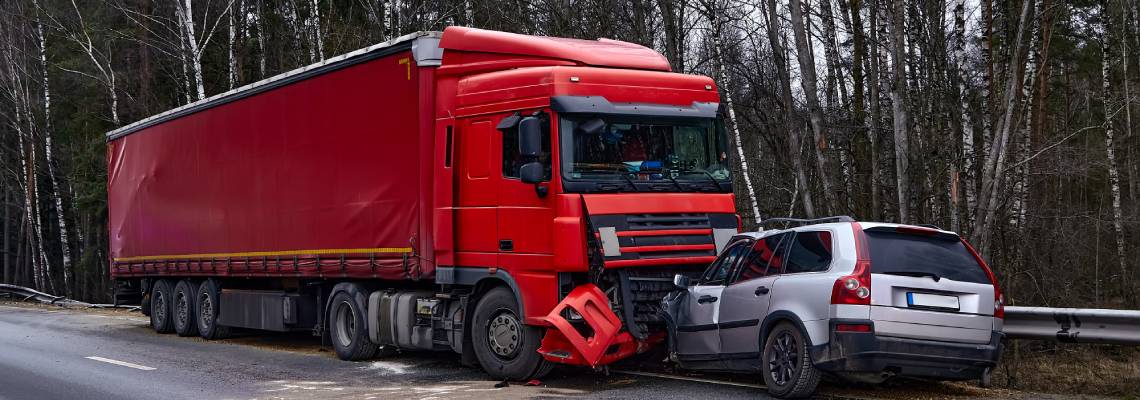
Common Causes of Jackknife and Underride Collisions
A jackknife accident happens when a truck's trailer swings sideways toward its cab, sometimes blocking other lanes of traffic. An underride accident occurs when a smaller vehicle crashes into a truck and slides beneath it. Both types of collisions can result from speeding, sudden braking, slippery roads, unsafe turns, poor visibility, or faulty truck equipment.
When a truck accident leaves you injured, the cause may not be immediately obvious. Was the driver going too fast, did the brakes fail, or did another safety problem contribute to the crash? Answering these questions can help establish who may be held responsible for your injuries.
Based in Woodland Hills and Lakeport, California, our attorneys at G. Aldrich Law represent people injured in serious truck accidents. We look beyond the initial accident report to examine potential negligence, identify responsible parties, and pursue compensation for our clients. Contact us today to schedule a free consultation.
Common Causes of Jackknife Truck Accidents
A jackknife can develop within seconds, leaving the driver with little time to regain control. The following factors can increase the risk, particularly when they occur together:
Sudden Braking and Wheel Lockup
Hard or improper braking may cause a truck's wheels to lock, particularly on slippery roads. If the trailer wheels skid, the trailer may swing sideways. If the tractor's drive wheels lose traction, the trailer may push the cab out of alignment.
Drivers who follow too closely or brake aggressively may increase the risk of losing control.
Excessive Speed and Sharp Turns
A truck traveling too fast around a curve may become unstable, particularly if the driver brakes or makes a sudden steering correction. Even when driving below the posted speed limit, a truck driver may be traveling too fast for the road's conditions.
Slippery Roads and Poor Braking Conditions
Rain, ice, and loose gravel can reduce tire traction, while wet or poorly maintained brakes may affect stopping performance.
Drivers must adjust their speed and braking to road conditions. Maintenance records may help establish whether defective brakes contributed to a crash.
Improper Cargo Loading
Unsecured or unevenly distributed cargo can affect a truck's handling. A shifting load may make the vehicle harder to control during braking or turning.
Investigators may examine cargo weight, loading records, and securement practices to determine whether improper loading contributed to the accident.
Common Causes of Underride Truck Accidents
Underride collisions occur when a smaller vehicle travels beneath the rear or side of a large truck or trailer. The following circumstances may contribute to these crashes:
Rear-End Impacts
A passenger vehicle may strike the rear of a trailer when traffic suddenly slows. Distracted driving, following too closely, or excessive speed can contribute. However, the rear driver is not automatically responsible. Defective truck lights, poor visibility, or unsafe truck maneuvers may also play a role.
Unsafe Turns and Trailer Positioning
Side underride collisions may occur when a truck turns across another vehicle's path or blocks traffic lanes.
For example, a truck driver who turns without allowing enough clearance for approaching vehicles may create a dangerous situation. Investigators must consider each driver's actions, visibility, and traffic conditions.
Poor Visibility and Defective Lighting
Trailers can be difficult to see at night, especially when stopped or positioned across a poorly lit roadway. Missing reflective markings, defective lights, or inadequate warnings may prevent approaching drivers from recognizing the danger in time.
Missing or Defective Underride Guards
Rear underride guards are designed to reduce the risk of smaller vehicles sliding beneath trailers during certain rear-end collisions.
Federal standards require rear impact protection on qualifying trailers and semitrailers, subject to exceptions. Federal regulations do not generally require side underride guards.
A missing, damaged, or improperly installed rear underride guard may allow a smaller vehicle to travel farther beneath the trailer during a collision, increasing the risk of severe injuries. However, even a compliant guard cannot prevent every underride collision.
Who May Be Responsible for These Truck Accidents?
Determining the cause is essential when establishing liability in truck accident claims. Depending on the circumstances, responsible parties may include:
Truck drivers: For speeding, distracted driving, unsafe turns, or improper braking.
Trucking companies: For negligent maintenance, unsafe operating practices, or negligence by drivers for whom they are legally responsible.
Maintenance providers: For negligent repairs that contribute to mechanical failures.
Cargo loading companies: For improperly loading or securing freight.
Manufacturers: For defective truck components that contribute to a collision.
California follows a comparative fault system. You may still recover compensation if you were partly responsible, although your recovery generally decreases according to your percentage of fault.
What Evidence Can Help Establish the Cause?
Determining why a truck jackknifed or why a vehicle went beneath a trailer often requires evidence beyond the police report. Important evidence may include:
Electronic vehicle data: Depending on the truck's equipment, recorded information may help investigators determine its speed, braking activity, and operation before the crash.
Dashcam or surveillance footage: Recordings showing vehicle movements before impact.
Driver records: Driving hours, training, and other information relevant to driver conduct.
Maintenance and loading records: Evidence of mechanical defects or improperly secured cargo.
Crash scene evidence: Vehicle damage, tire marks, debris, and roadway conditions.
Electronic records may be overwritten, and physical evidence can disappear. Acting promptly can help preserve information needed to establish fault.
Our personal injury attorneys can review evidence, investigate potential safety violations, and work with qualified experts when necessary to establish how a collision occurred.
Get Legal Help After a Jackknife or Underride Collision in California
Jackknife and underride collisions can result from driver errors, mechanical problems, unsafe loading, or several contributing factors. Identifying what caused the crash is important when determining liability and pursuing compensation for injuries and financial losses.
At G. Aldrich Law, we help injured individuals from our offices in Woodland Hills and Lakeport, serving Lake County, Los Angeles County, Colusa County, Riverside County, Shasta County, Mendocino County, Humboldt County, Yolo County, Tehama County, Glenn County, Butte County, Ventura County, and San Bernardino County.
George Aldrich, one of our attorneys, is an Army veteran and former salesman who brings discipline, determination, and strong communication skills to his legal practice. He believes every case deserves a fair chance and is prepared to challenge insurance companies when they dispute a legitimate claim.
Contact us to schedule a free consultation and find out how we can help you pursue fair compensation.