
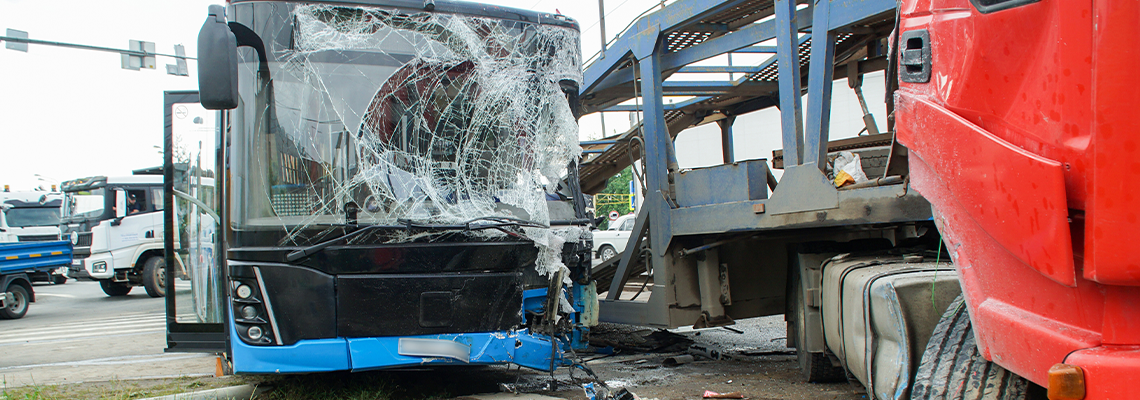
Evidence That Helps Prove Liability in Bus Accident Cases
A bus accident in California can involve several responsible parties, including the bus driver, transit company, other motorists, or maintenance contractors. Determining who caused the crash isn't always straightforward, especially when the parties involved give conflicting accounts. Evidence plays an important role in establishing liability and supporting your claim for compensation.
Meanwhile, you may be dealing with painful injuries, mounting medical bills, missed work, and questions from insurance companies. With so much to handle during your recovery, investigating the accident and determining who may be legally responsible can be challenging.
At G. Aldrich Law, we help injured passengers, pedestrians, and motorists investigate bus accidents, identify potentially responsible parties, and gather evidence to support their claims. From our offices in Woodland Hills and Lakeport, California, we represent clients throughout Northern and Southern California. Contact us today to discuss your accident and learn how we can help you pursue compensation.
1. Documentation From the Accident Scene
Evidence from the accident scene can reveal how the collision occurred and whether someone violated traffic laws or failed to respond safely to road conditions. Even if you couldn't document the scene yourself, other sources may provide information about what happened. Some of the most useful types of evidence include:
Police accident reports: These reports may contain an officer's observations, statements from those involved, and preliminary findings about the crash. However, California law restricts the use of certain accident reports as evidence in civil trials, and an officer's opinion does not automatically establish liability.
Photographs and videos: Images of vehicle damage, skid marks, traffic signals, and road conditions can help investigators reconstruct the accident and identify contributing factors.
Surveillance and dashcam footage: Some buses have onboard cameras, while nearby businesses or motorists may have recordings showing what happened before or during the collision.
Weather and road condition reports: Rain, poor visibility, or road hazards may help establish whether the driver took reasonable precautions under the circumstances.
For example, if a bus driver claims another vehicle caused the collision, surveillance footage showing the bus running a red light may contradict that account. Investigators can compare the recording with other evidence to determine whether the violation contributed to the crash.
2. Witness Testimony and Bus Company Records
Witnesses and company records can reveal details that photographs or accident reports might miss. These sources may establish whether the driver operated the bus unsafely, the company neglected maintenance, or another party contributed to the accident. The following records and testimony may be particularly useful:
Eyewitness statements: Passengers, pedestrians, and nearby motorists may describe unsafe turns, sudden lane changes, speeding, or other actions they observed before the accident.
Bus maintenance and inspection records: These documents may reveal mechanical defects, missed inspections, or repairs the company failed to complete. They may support a negligence claim if an unresolved problem contributed to the collision.
Driver qualification and training records: Licensing information, driving history, and training documents may reveal whether the company properly evaluated and prepared its drivers. Any shortcomings must be relevant to the circumstances of the crash.
Driver schedules and hours-of-service records: When applicable, these records may reveal excessive driving hours or circumstances suggesting fatigue. The relevant requirements depend on the type of bus operation.
For instance, if maintenance records show that a company received repeated complaints about faulty brakes but continued operating the bus without addressing the problem, those records may support a negligence claim if the defect contributed to the accident.
In California, bus operators that qualify as common carriers must exercise a heightened degree of care when transporting passengers. Evidence of unsafe driving or inadequate maintenance may help establish whether the operator breached that duty.
3. Technology and Digital Records
Some buses have electronic systems that record vehicle operations and driver activity. When available, these records may reveal information that witnesses cannot recall or that physical evidence alone cannot establish. Several types of digital evidence may be useful in a bus accident investigation:
Event data recorders: Sometimes called a vehicle's "black box," these devices may record speed, braking activity, and other operating information before or during a crash. Not every bus has this technology, and the information recorded varies by system.
GPS and telematics data: These systems may track a bus's location, route, speed, and stops. Investigators can compare the information with the driver's account to identify inconsistencies.
Cell phone records: When lawfully obtained, relevant records may reveal phone activity around the time of the accident. However, phone activity alone does not establish that the driver was distracted or caused the collision.
For example, GPS records indicating that a bus exceeded the posted speed limit shortly before a collision may support allegations of unsafe driving. Investigators must still evaluate the accuracy of the data and determine whether the speed contributed to the accident.
4. Medical Records That Connect Your Injuries to the Accident
Medical records serve a different purpose from evidence establishing who caused the crash. They document your injuries and treatment and may help establish whether the accident caused or aggravated your medical condition.
Emergency room reports, diagnostic imaging, physician evaluations, and treatment notes may support your claim. These records can also document the severity of your injuries, the care you received, and any continuing medical needs.
Keep copies of your medical bills, treatment records, and documentation of missed work. Although these documents generally do not establish liability, they can support your claim for damages once you establish another party's legal responsibility.
Why Preserving Bus Accident Evidence Matters
Some evidence may disappear shortly after a bus accident. Surveillance systems can overwrite recordings, bus companies may repair damaged vehicles, and electronic systems may no longer retain information relevant to the crash.
If you can do so safely, take photographs, collect witness contact information, and keep copies of documents related to the accident. Don't delay necessary medical treatment to gather evidence.
At G. Aldrich Law, our California bus accident lawyers can send preservation requests to bus companies and other parties to help prevent important records from being lost or destroyed. If necessary, we can take further legal steps to obtain records that aren't voluntarily provided.
If your accident involved a public transit agency, California's government claim requirements may apply. Many personal injury claims against public entities require you to present a government claim within six months after the claim accrues, subject to exceptions and late-claim procedures. You generally must satisfy applicable claim-presentation requirements before suing the public entity.
Contact Us to Discuss Your Case
If you've been injured in a bus accident, the evidence you gather may determine whether you can establish another party's responsibility for your injuries. At G. Aldrich Law, we investigate bus accident claims, examine available records, and represent injured individuals seeking compensation for losses caused by negligence.
From our offices in Woodland Hills and Lakeport, California, we serve clients throughout Lake County, Los Angeles County, Colusa County, Riverside County, Shasta County, Mendocino County, Humboldt County, Yolo County, Tehama County, Glenn County, Butte County, Ventura County, and San Bernardino County. Contact us today to schedule a consultation and discuss how we can help you pursue your claim.