
How Dashcam Footage Can Strengthen a Car Accident Claim
Dashcam footage can strengthen a car accident claim by showing how a collision occurred, identifying potentially unsafe driving behavior, and providing evidence when drivers disagree about who was responsible. A clear recording may help establish fault and support your account of the accident during insurance negotiations or legal proceedings.
After a crash, you may be dealing with injuries, vehicle repairs, and questions from insurance companies. If the other driver disputes what happened, having video evidence can be particularly valuable.
At G. Aldrich Law, located in Woodland Hills and Lakeport, California, we represent injured individuals in car accident claims throughout Northern and Southern California. Reach out now to schedule a free consultation.
Why Dashcam Footage Matters After a Crash
Memory tends to blur after a collision. Adrenaline, pain, and stress all affect how well you recall the sequence of events, and the other driver's account will often differ from yours.
Without objective proof, a claim can turn into one person's word against another's, which gives insurance adjusters an opening to question your version of events or shift some of the blame onto you.
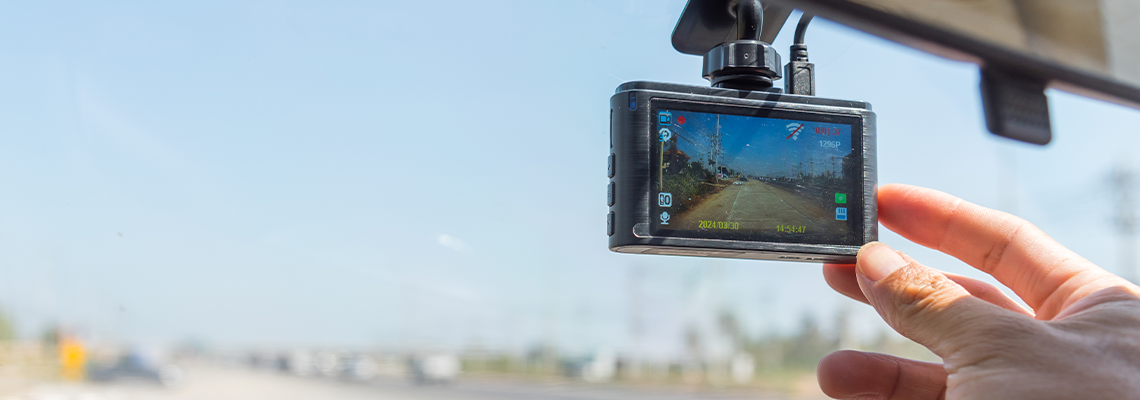
Dashcam footage provides a visual record of events within the camera's field of view. It may capture the moments leading up to a crash, including traffic conditions, vehicle movements, and actions that contributed to the collision. However, a recording does not necessarily tell the whole story. The camera's angle, video quality, and whether important events occurred outside its view can affect how useful the footage is.
What Dashcam Footage Can Reveal
Not every recording captures the same details, but a good dashcam can pick up far more than most people expect. The following details may help establish how a collision occurred and whether a driver failed to follow traffic laws or exercise reasonable care.
Vehicle speed and positioning: Footage can show where vehicles were traveling and may provide clues about their relative speeds. Some dashcams record GPS speed data, but determining another vehicle's exact speed may require additional evidence or expert analysis.
Traffic signal and sign compliance: A recording can show whether a driver ran a red light, rolled through a stop sign, or ignored a yield sign.
Driver behavior: Video can capture unsafe lane changes, sudden braking, aggressive maneuvers, or other visible conduct leading up to the collision.
Weather and road conditions: Footage can document rain, fog, glare, or visible road hazards that may have contributed to the crash.
Point of impact: A clear angle of the collision itself can help establish where the vehicles made contact and how the impact occurred.
For example, if another driver claims you entered an intersection against a red light, footage showing that your signal was green may directly challenge that account. The recording can be especially useful when witness statements conflict or the police report does not fully explain what happened.
How Car Accident Lawyers Use Footage to Strengthen Your Claim
Dashcam footage can provide valuable evidence in car accident claims, particularly when drivers disagree about who caused the collision. Your attorney can review the recording alongside police reports, medical records, and witness statements to evaluate liability, or who may be legally responsible for the crash.
Establishing Fault and Challenging Disputed Accounts
Dashcam footage may reveal traffic violations or unsafe driving behavior that contributed to the crash. Your attorney can compare the recording with other evidence to identify inconsistencies in the drivers' accounts.
California follows a pure comparative negligence rule, meaning you may still recover compensation even if you were partly responsible for the accident. However, your compensation is generally reduced by your percentage of fault.
For example, if your proven damages total $100,000 and you are found 20% responsible, your recovery would generally be reduced to $80,000. Dashcam footage may help determine how responsibility should be divided.
Supporting Insurance Negotiations and Legal Proceedings
Clear footage may strengthen your position during settlement negotiations by providing evidence of how the collision occurred. However, it does not guarantee that an insurer will accept liability or offer a particular settlement amount.
Video evidence primarily helps establish the circumstances of the crash. Medical records, treatment history, and other documentation remain important for proving your injuries and related losses.
If a case moves toward mediation or trial, the recording may support your account of the collision. In California, dashcam footage must be properly authenticated and satisfy other applicable evidence rules before it can be admitted at trial.
We can evaluate whether the recording supports your case and how it should be presented alongside other evidence.
Steps to Take After a Crash With Dashcam Footage
If your vehicle has a dashcam, or if you spot another car's dashcam nearby, acting quickly can protect that footage before it's lost or overwritten. Here's what to keep in mind in the hours and days following a collision:
Secure the footage right away: Many dashcams overwrite older recordings automatically, so save the file to a separate device as soon as possible.
Back up the video file: Store a copy in more than one place, such as a cloud drive or external storage, in case one file becomes corrupted or lost.
Preserve the original recording: Keep the complete, unedited file, including any available timestamps, audio, and metadata. Avoid trimming or altering the original, even if some portions appear irrelevant or unfavorable.
Note the time and location: Write down when and where the footage was recorded, along with any other details you remember about the crash.
Share the footage with your lawyer: Have your attorney review the recording before deciding how to use or disclose it. Continue complying with applicable insurance reporting requirements.
Identify other possible recordings: If nearby drivers, businesses, or traffic cameras may have captured the collision, note their locations and ask your attorney about requesting the footage before it is deleted.
Even if your dashcam did not capture the actual impact, the moments before or after the collision may still provide useful evidence.
Contact Our Car Accident Lawyer Who Understands What You're Going Through
Dashcam footage may answer important questions about a collision, but understanding how it fits with the other evidence is just as important.
At G. Aldrich Law, our team, led by attorney George Aldrich, represents injured individuals in car accident cases. We review available evidence, address disputed liability, and pursue compensation through insurance claims or litigation when appropriate.
With offices in Woodland Hills and Lakeport, California, we serve clients across Lake County, Los Angeles County, Colusa County, Riverside County, Shasta County, Mendocino County, Humboldt County, Yolo County, Tehama County, Glenn County, Butte County, Ventura County, and San Bernardino County.
Contact us today to schedule a free consultation and discuss how available footage and other evidence may support your car accident claim.