
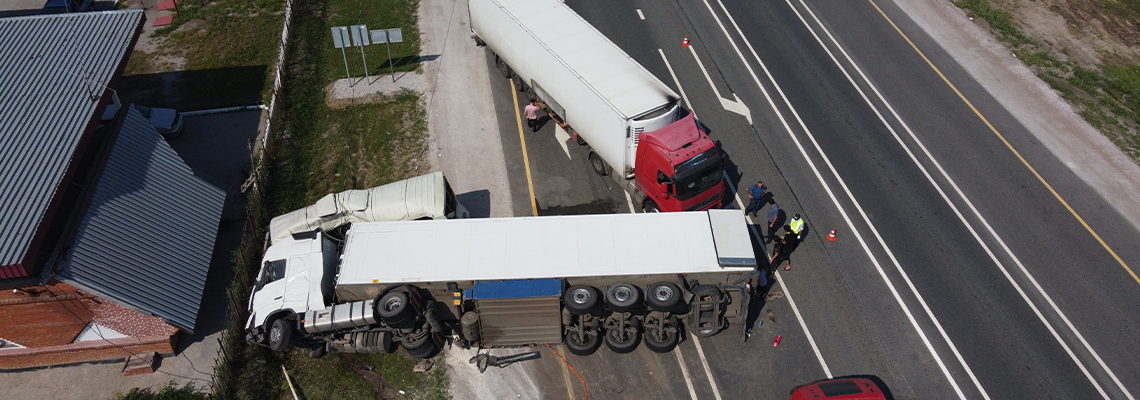
Unique Liability Challenges in Commercial Truck Accident Claims
A commercial truck accident claim often raises liability questions that go far beyond what happens in a typical passenger vehicle case. A crash involves a driver, a trucking company, a maintenance provider, a cargo-loading business, or another company tied to the trip. When injuries are serious and the financial stakes are high, the claim usually turns on who had control, who had duties, and which failures contributed to the wreck.
At G. Aldrich Law, we offer experienced legal representation grounded in the issues these claims can raise. From our offices in Woodland Hills and Lakeport, California, we serve clients across Lake County, Los Angeles County, Colusa County, Riverside County, Shasta County, Mendocino County, Humboldt County, Yolo County, Tehama County, Glenn County, Butte County, Ventura County, and San Bernardino County. Get in touch with us today.
Why Commercial Truck Accident Claims Involve More Than One Liable Party
A truck accident can seem straightforward at first. A large vehicle strikes a smaller one, and the victim assumes the driver is the only responsible party. In many claims, though, the driver is only one part of the liability picture.
Commercial driving is tied to business records, supervision, dispatch decisions, vehicle ownership, maintenance schedules, and delivery demands, all of which affect what happened before impact.
That wider liability picture matters because the source of fault can shape the direction of the claim. A driver could’ve made an unsafe move, but the claim can also involve poor hiring practices, weak supervision, unrealistic delivery timing, or a truck that should not have been on the road. Once the focus expands from the collision itself to the business relationships behind it, the next issue is often who actually controlled the driver and the truck.
Employment Status Can Change The Direction Of A Claim
One major issue in a commercial truck accident case is whether the driver was working as an employee, an independent contractor, or under another business arrangement at the time of the crash. Those details can affect whether liability can extend beyond the driver to a carrier or another company, which is why the records that often matter most include:
Dispatch communications: These indicate whether the driver was being pushed to meet a deadline, change a route, or stay on the road despite fatigue, traffic, or weather conditions.
Driver qualification files: These records help show whether the company properly reviewed the driver's license status, training, driving history, and prior safety issues before putting that person behind the wheel.
Lease and operating agreements: These documents help clarify who owned the truck, who had the right to control the trip, and which business was tied to the driver's conduct at the time of the wreck.
Hours-of-service records: These materials reveal whether the driver had been on duty too long or whether written logs conflict with electronic trip data and other timeline evidence.
When those documents are reviewed together, they can shift the claim from a narrow case against one driver to a broader case involving business decisions made before the collision. Once that issue is examined, the claim often moves into whether the truck or the cargo created additional sources of fault.
Vehicle Condition and Cargo Handling Can Add New Liability Issues
A commercial truck accident isn't always caused by a single driving decision. In some cases, the vehicle's condition or the way the cargo was loaded played a direct part in the crash. Brake problems, worn tires, steering issues, poor lighting, shifting freight, overloaded trailers, and unsecured cargo can all affect how a truck moves and responds on the road.
When those facts are present, liability extends to parties other than the driver, which is why some of the issues that often come into focus include:
Improper loading practices: A trailer loaded unevenly or poorly secured is harder to control during braking, lane changes, sharp turns, or sudden traffic movements.
Missed maintenance duties: A company responsible for inspections, repairs, or routine service faces scrutiny if worn parts or unresolved mechanical issues contributed to the collision.
Defective equipment issues: Problems with brakes, tires, trailer connections, or other components raise questions about whether a product failure or faulty part played a role.
Shipping and handling decisions: A shipper, loader, or related company becomes part of the claim if cargo weight, packaging, or securement created a preventable hazard on the road.
When those outside parties are involved, the case becomes less about a single driving error and more about how multiple failures came together. That usually leads to another dispute that can significantly affect recovery, namely, how the available insurance applies to each party.
Insurance Issues Often Become a Separate Fight
Commercial truck accident claims involve multiple insurance policies rather than a single one. There is coverage for the driver, the motor carrier, the trailer owner, another contractor, or a separate company tied to cargo or maintenance. Even when liability seems clear, determining whose policy applies first remains an important issue for insurers.
Those disputes can matter because they affect how a claim is valued and resolved. They can also delay progress if insurers try to shift the blame elsewhere. In California, fault allocation can become especially important when more than one party shares responsibility and when the defense argues that the injured person also contributed to the crash.
As a result, commercial truck accident claims often require careful attention not just to what happened on the road, but also to how each defendant and insurer tries to frame the facts after the collision.
Reach Out to a Commercial Truck Accident Attorney Today
If you were hurt in a commercial truck crash, liability involves more than the driver alone. G. Aldrich Law represents clients in claims that require careful review of the parties, records, and insurance issues related to the collision.
From our offices in Woodland Hills and Lakeport, California, we serve clients in Lake County, Los Angeles County, Colusa County, Riverside County, Shasta County, Mendocino County, Humboldt County, Yolo County, Tehama County, Glenn County, Butte County, Ventura County, and San Bernardino County. Reach out to our attorneys at G. Aldrich Law to discuss your situation today.