
What Evidence Is Essential for Proving Fault in Car Accident Cases?
Car accidents can happen in an instant, but medical bills, vehicle repairs, lost income, and ongoing pain often follow, leaving many people unsure of how to move forward. In California, establishing fault is a critical step in seeking compensation after a crash.
Fault isn’t always obvious, and disagreements frequently arise between drivers, insurance companies, and investigators. Evidence plays a central role in clarifying what happened and determining responsibility. In personal injury matters, the quality of evidence can influence whether a claim is resolved efficiently or becomes a prolonged dispute.
At G. Aldrich Law, located in Woodland Hills and Lakeport, California, we understand how overwhelming a car accident can be, especially when questions about fault and responsibility arise. We take a compassionate approach to every case we handle, recognizing that each situation is personal and often emotionally charged.
Our goal is to help you feel supported, informed, and confident as you pursue accountability after a serious accident. Our attorneys can help you gather the evidence you need to prove fault after a car accident and submit a strong claim to pursue the compensation you need.
How Is Fault Determined in a Car Accident?
California follows a comparative fault system, meaning more than one party can share responsibility for a collision. This means you can still recover damages even if you’re partially at fault. However, the amount may be reduced based on your percentage of responsibility. Therefore, evidence is used to show both the other driver’s negligence and to limit unfair blame.
Insurance companies carefully review accident details to determine how fault should be divided. They often look for signs of speeding, distracted driving, failure to yield, and other traffic violations. In personal injury cases, detailed and consistent evidence can help counter an insurance company's attempts to exaggerate or misassign responsibility.
The goal of fault determination is to show that a driver failed to act with reasonable care under the circumstances. The clearer the evidence, the stronger your claim.
Types of Evidence That Can Help Prove Fault
Following a car accident, you will need to provide comprehensive evidence to help you determine fault and file a strong claim for damages. The general types of evidence that can typically support your claim include the following:
Official Reports
Police reports are often one of the first documents reviewed after a crash. Officers responding to the scene document vehicle positions, visible damage, road conditions, and statements from those involved. While these reports aren’t final rulings on fault, they can strongly influence how insurers and attorneys evaluate a claim.
Scene Documentation
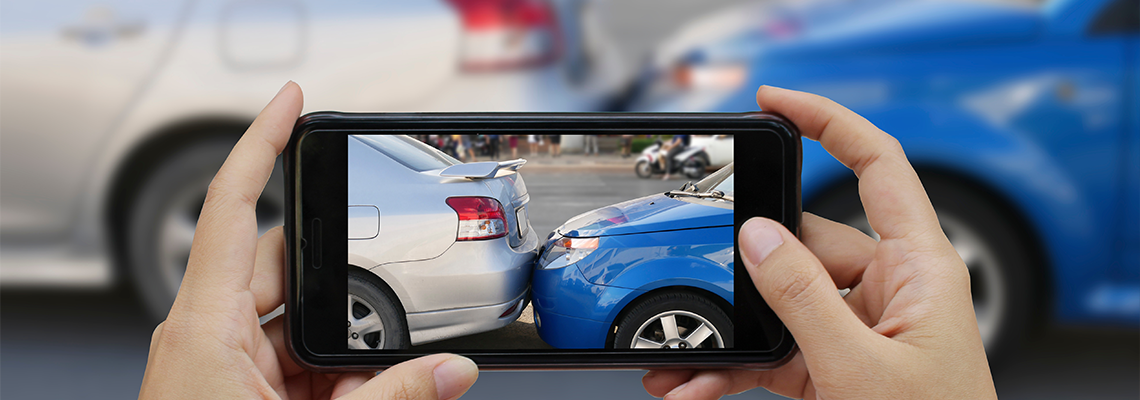
Photographs and video recordings from the scene are also extremely valuable. Images of vehicle damage, skid marks, debris, traffic signs, and weather conditions help preserve details that may otherwise be lost once vehicles are moved and roads are cleared.
Video footage from dash cameras or nearby businesses can offer an unbiased view of how the accident occurred. Early documentation is especially important. The condition of the scene immediately after a crash often provides clues that can’t be recreated later.
Witness Statements
Witness statements can provide neutral perspectives that support your account. Third parties who observed the crash may recall details about driving behavior, traffic signals, or sudden maneuvers that contributed to the collision. Their testimony can help resolve conflicts among the parties involved.
Medical Records
Emergency treatment notes, diagnostic tests, and physician evaluations establish when injuries occurred and how serious they were. These records can connect specific injuries to the mechanics of the crash, reinforcing the claim that the accident caused the harm.
Professional & Expert Testimony
In more complicated cases, expert opinions may serve as pertinent evidence. Accident reconstruction specialists can analyze physical evidence to explain how a collision occurred, while medical experts can clarify the relationship between the crash and the injuries. In personal injury disputes, professional analysis can strengthen your claim when liability is contested.
How Different Types of Evidence Work Together
A strong car accident claim rarely relies on a single piece of evidence. Instead, a claim is built through multiple sources that support one another and create a consistent narrative of events. When evidence aligns, it becomes harder for insurers to challenge fault.
Each piece of evidence helps fill gaps that another source alone may not fully explain, thereby creating a clearer and more persuasive account of what occurred. This combined approach also helps reduce disputes over credibility, timing, or causation.
When these elements are reviewed together, patterns often emerge that strengthen your claim and clarify responsibility. Working with an experienced car accident attorney can help you properly collect, preserve, and present all relevant evidence to support the facts of your case.
Legal guidance can also help identify missing documentation or inconsistencies before they become obstacles. In personal injury cases, consistency across these sources can significantly affect how fault is assigned and whether your claim is resolved.
Contact Our Experienced Car Accident Attorneys for Guidance Today
Proving fault in a California car accident requires more than assumptions or opinions. It depends on timely, accurate, and well-organized evidence that shows how the collision occurred and why another party should be held responsible. Police reports, scene documentation, medical records, and witness statements all work together to form a clear and credible picture of what happened.
Since California follows a comparative fault system, even small details can affect how responsibility is divided. Therefore, strong evidence not only supports compensation but also helps protect you from unfair blame. Acting early can reduce complications and preserve information that may otherwise be lost.
At G. Aldrich Law, we take the time to review the facts of your case, gather meaningful evidence, and support you through every step. If you were injured in a car accident and have questions about proving fault, contact us today to discuss your situation and learn how we can help.
With offices in Woodland Hills and Lakeport, California, we serve clients across Lake County, Los Angeles County, Colusa County, Riverside County, Shasta County, Mendocino County, Humboldt County, Yolo County, Tehama County, Glenn County, Butte County, Ventura County, and San Bernardino County.